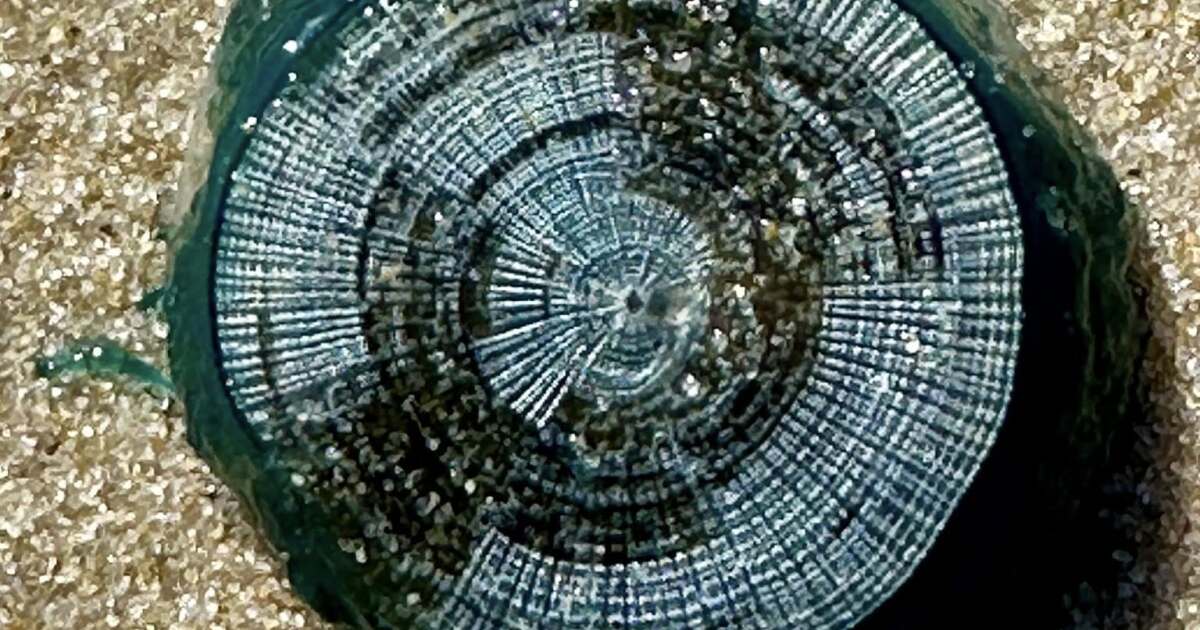
Unique Blue Button Sighting Reported in Sandbridge Area of Virginia Beach
In a fascinating turn of events for marine enthusiasts and beachgoers alike, the Sandbridge area of Virginia Beach is currently experiencing a unique sighting that has piqued local interest and concern: the appearance of blue buttons, an unusual marine organism. This phenomenon follows closely on the heels of a separate sighting of the more commonly known Portuguese man o’ war at the Oceanfront, indicating a sudden influx of intriguing marine life to the Virginia coast.
What Are Blue Buttons?
At first glance, blue buttons may resemble jellyfish, but they belong to a different category entirely. Officially classified as Velella velella, the blue button is a colonial hydrozoan, meaning it is composed of a colony of genetically identical organisms that work in unison to create a single, larger creature. Each blue button can measure about 1 to 2 inches in diameter and features a vibrant blue color, allowing it to float on or just below the surface of the water.
These delicate organisms typically inhabit warmer, tropical waters, raising questions about why they have recently started appearing in the Virginia Beach area, particularly in Sandbridge, where Julie Daniel Harshaw spotted two individuals during a beach walk near the Chesapeake Bay Bridge.
Why Are Blue Buttons Appearing in Virginia Beach?
There are a few hypotheses regarding the sudden appearance of blue buttons along the Virginia coastline. According to experts from the Virginia Aquarium, recent weather patterns could have played a significant role in their migration northward. The predominant south winds and currents may have pushed these creatures into the region, allowing them to drift further from their usual habitats. Similar to the Portuguese man o’ war, blue buttons lack the ability to control their motion but instead rely on ocean currents and winds to navigate.
What Should You Do If You Encounter a Blue Button?
While blue buttons may be visually striking and intriguing, beachgoers must exercise caution. These organisms possess stinging cells that can irritate human skin upon contact. Although their stings are generally less harmful than those of a jellyfish or a Portuguese man o’ war, avoiding direct contact is advisable. Should you happen upon a blue button during your beach outing, it is best to admire it from a distance and give it the space it needs.
The Broader Implications of Marine Sightings
The increased sightings of marine creatures like blue buttons and Portuguese man o’ wars can signal changes in ocean health and climate conditions. As warmer waters and shifting currents influence marine biodiversity, such events often serve as a reminder of the interconnectedness of marine ecosystems and the effects of environmental change.
Conclusion
The sighting of blue buttons in the Sandbridge area of Virginia Beach presents a compelling opportunity for locals and visiting nature lovers to engage with the rich marine life of the Atlantic Ocean. While these organisms may remain relatively rare in Virginia waters, their recent appearances highlight the complex relationships between ocean conditions, climate variability, and marine species distribution.
If you’re planning a trip to the beach in Virginia Beach, keep an eye out for these stunning blue creatures. And remember: observe from a distance, stay informed on interactions with marine life, and embrace the beauty of nature all around you. Whether you’re a regular beachgoer or a curious visitor, sightings like these can enrich your connection with the environment and serve as a poignant reminder of the ocean’s mysteries.
Additional Resources
For those interested in learning more about blue buttons and their counterparts in marine environments, consider visiting the Virginia Aquarium’s official website or follow local marine conservation initiatives. Participating in community beach cleanup efforts and educational programs can also enhance your understanding of coastal ecosystems and promote a healthier ocean.
Engage with the beauty of Virginia Beach this summer, but do so responsibly and with a sense of curiosity about the incredible marine life sharing our shores. Whether spotting a blue button or simply enjoying the sun, remember that each encounter with nature is an opportunity to deepen your understanding of the world around you.