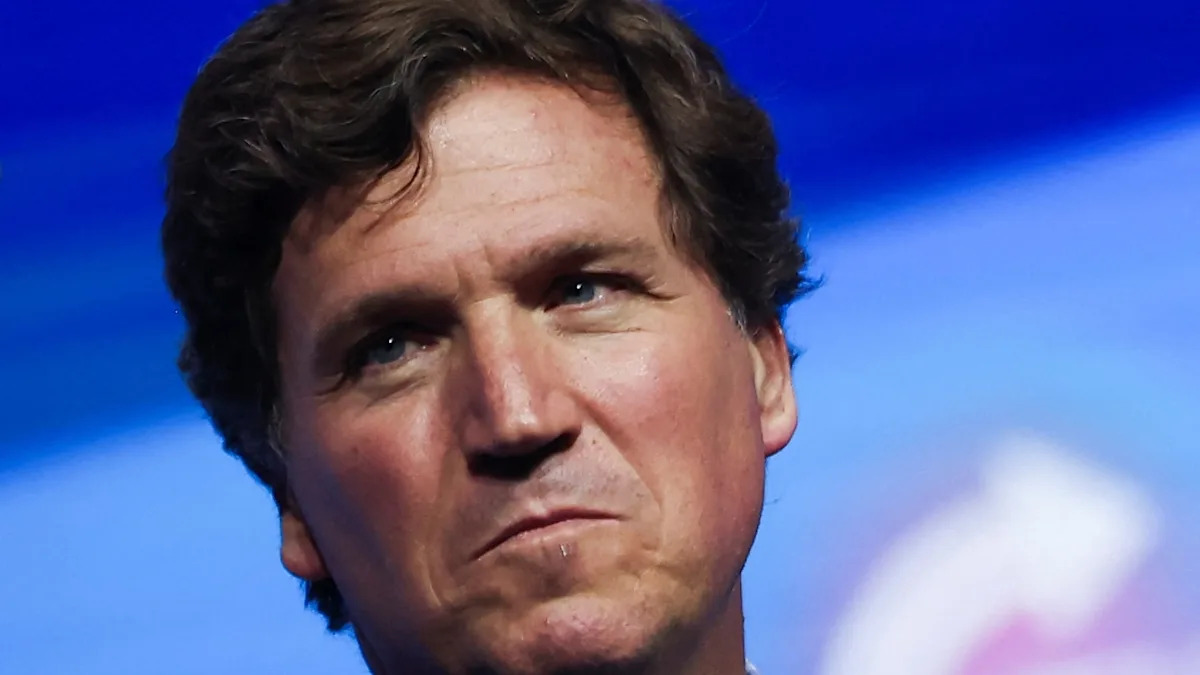
In recent discussions surrounding the tragic assassination of Charlie Kirk, Tucker Carlson has emerged as a vocal critic of those he believes are misappropriating this event for their own agendas. Using a combination of personal anecdotes and blunt honesty, Carlson has expressed his disdain for leaders who place their causes above the memory of Kirk, who was seen as a warrior for free speech and conservative values.
Reflections on Kirk’s Life and Death
Charlie Kirk, a prominent conservative activist and founder of Turning Point USA, was gunned down at the age of 31. His untimely death sent shockwaves through various circles, prompting an outpouring of grief and tributes. Among the many responses was a statement from Israeli Prime Minister Benjamin Netanyahu, which described Kirk as a “lion-hearted friend of Israel” and lamented his murder as a loss for all who champion free speech and Judeo-Christian values.
In a recent episode of The Charlie Kirk Show, Carlson criticized reactions from political leaders and foreign dignitaries using Kirk’s assassination to further their own political narratives. “It’s disgusting,” Carlson emphasized, arguing that leveraging someone’s tragic end for political gain is not only inappropriate but also counterproductive. While he did not name specific individuals, many interpreted his remarks as directed at leaders like Netanyahu, who immediately sought to honor Kirk’s legacy through the lens of political alignment.
The Broader Context
The conversation around Kirk’s assassination has unfolded in a highly charged political atmosphere. Carlson highlighted the dangers of allowing personal tragedies, particularly those as impactful as Kirk’s death, to be co-opted by groups or individuals with their own divisive messages. For instance, extremist organizations reportedly attempted to use Kirk’s murder to recruit new members, a trend that Carlson finds alarming. This extension of grief into the realm of political capital raises ethical questions about authenticity and empathy.
Moreover, Utah’s Governor Spencer Cox remarked on social media platforms, calling them "conflict entrepreneurs" that exacerbate divisions and reward provocative behavior. This criticism underlines a growing concern regarding how narratives are shaped in today’s digital landscape, often leading to a culture of outrage rather than a genuine collective grief.
Mutual Respect in Disagreement
In his reflections, Carlson recalled his decade-long acquaintance with Kirk. He noted that, despite initial doubts about Kirk’s seriousness due to his youth, he grew to appreciate Kirk’s ability to engage on contentious topics without devolving into bitterness or hate. This personal connection adds a layer of depth to Carlson’s commentary, as he illustrates the importance of respectful discourse, especially amidst tragedy.
“Yes, we disagree on several issues, but that doesn’t mean we cannot engage in civil discourse,” Carlson emphasized, suggesting that true progress requires listening and understanding, even when opposing views are at play. His perspective signals a yearning for unity in the face of loss, rather than division based on individual interpretations of political gain.
Implications for Public Discourse
Carlson’s core message resonates beyond the immediate political ramifications of Kirk’s death. It raises profound questions about how society engages with grief and loss in the public sphere. Are we capable of honoring the memory of those lost without turning their legacies into political tools? This dilemma is pivotal in an age where information spreads rapidly, and messages can be easily distorted.
The timing of Carlson’s remarks is particularly critical, as inflammatory rhetoric has surged in political arenas in recent years. With public figures frequently invoked in discourse to further causes—whether noble or self-serving—the responsibility lies with individuals to approach conversations with integrity. Carlson’s plea to refrain from repurposing emotional moments for political gain serves as a reminder to prioritize mutual respect over opportunism.
Conclusion
As discussions around Charlie Kirk’s assassination evolve, Tucker Carlson stands firmly against using tragedy as a pivot for political ambition. By urging leaders and commentators to focus on genuine reflection rather than exploitation, he advocates for a shift in the tone of discourse, one that honors the victim’s life without compromising the values that shaped their existence. While the complexity of political narratives is unlikely to dissipate, the call for more humane engagement in the wake of loss remains a valuable lesson in today’s tumultuous landscape. The discourse surrounding Kirk’s death allows for reflection on broader themes of respect, empathy, and the responsibilities of leaders to engage in meaningful conversations instead of promoting personal agendas. In honoring Kirk’s legacy, let us strive for a more thoughtful and respectful discourse.