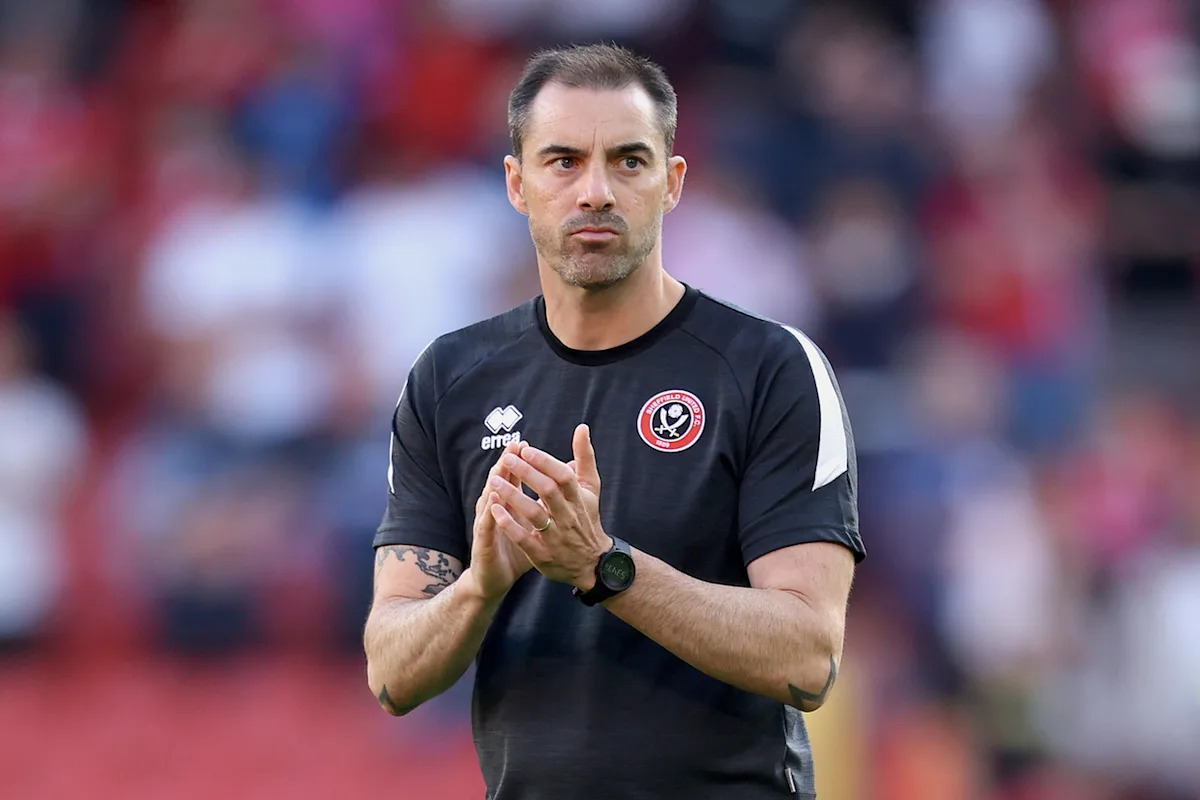
Rúben Sellés has been sacked by Sheffield United, marking a swift end to his tenure after just five Championship games and one League Cup match. His departure comes on the heels of disappointing results, with the club failing to secure any points and suffering a significant goal deficit, conceding 14 goals in total. The decision to relieve Sellés of his managerial duties reflects the club’s pressing need to rectify its poor form and engage its fan base, especially following a 5-2 defeat to Ipswich Town that punctuated his brief stint.
### The Background
Sellés stepped into the managerial role after Chris Wilder was dismissed following a play-off loss to Sunderland last season. Wilder, who had a successful tenure with Sheffield United, returning them to the Premier League and keeping them competitive, was a fan favorite. The expectation was that Sellés could build on this foundation, but results quickly soured.
As a club that had recently tasted the highs of promotion and competitiveness, Sheffield United found themselves in a precarious situation. Their return to the Championship has been marred by inconsistency, and Sellés’ inability to turn the tide led to swift action from the board.
### Performance Concerns
Sellés’s record speaks for itself: five straight losses and a shaky defense that has led to an alarming 14 goals conceded. It is clear that his strategy and methods did not resonate with the players or produce the desired results. Under his guidance, the team appeared disjointed, lacking both cohesion and a sense of direction. The inability to pick up points in key fixtures only exacerbated the mounting pressure from supporters and stakeholders alike.
The dismissal was framed by the club’s board as a necessary response to underperformance. They released a statement expressing appreciation for Sellés’s efforts but emphasized the need for change in light of recent performances and supporter sentiment. It exemplifies a harsh but pragmatic approach to management in modern football, where results are paramount, and stakes are high.
### Chris Wilder’s Possible Return
In the wake of Sellés’s sacking, rumblings of a potential return for Chris Wilder have begun to circulate. There is a sense of nostalgia among fans who remember the success he brought to the club during his previous stint. Wilder’s familiarity with the club culture, combined with his track record of promoting talent from within, positions him as a compelling candidate for a return.
His managerial style, which emphasizes hard work, resilience, and tactical discipline, contrasts sharply with the lack of results seen under Sellés. Fans are cautiously optimistic about Wilder’s return, believing he could restore the club’s competitive edge and revive player morale.
### The Broader Impact
The quick turnaround in managerial leadership at Sheffield United highlights a wider trend in football: the demand for instant results. Clubs often opt for drastic measures, recognizing that loyalty to a manager does not equate to success on the pitch. The decision to sack Sellés after just six matches may seem extreme, but it reflects an environment where failure to secure points directly impacts financial viability, fan engagement, and long-term planning.
Moreover, the move underscores the intense pressure faced by managers at all levels, particularly in the English Football League (EFL), where the stakes can impact club finances and future stability. Sellés’s sacking demonstrates that even a slight dip in performance can prompt immediate action, forcing boards to reconsider their strategic outlook and future plans.
### The Role of Fans and Stakeholders
As Sheffield United grapples with these challenges, the role of fans becomes increasingly significant. Supporters often express their feelings about managerial decisions, and clubs that take these sentiments into account may find themselves better positioned for future success. The club’s board explicitly acknowledged the feelings of fans as part of their decision-making process, suggesting a shift toward more engaged and responsive management.
Engaging with the fan base, maintaining communication, and being transparent about decisions can foster loyalty and support even when results are not favorable. It’s a reminder that clubs are not just businesses; they are institutions woven into the fabric of their communities.
### Looking Ahead
As Sheffield United begins the search for their next manager, the focus will inevitably turn to finding a candidate who can restore stability and inspire confidence among players and fans alike. The club’s ownership will need to approach this process carefully, considering not only the immediate need for results but also the long-term vision for the club.
Whether or not Chris Wilder is reinstated, the next managerial appointment will be critical. The new manager must bring fresh ideas, rekindle the passion within the squad, and create a sense of purpose that resonates throughout the club.
### Conclusion
The sacking of Rúben Sellés underscores the high stakes involved in football management. Decisions are made rapidly, driven by performance metrics and fan sentiment. With the potential return of Chris Wilder on the horizon, Sheffield United has a moment of both opportunity and challenge. The next steps will determine whether the club can regain its footing in the Championship and begin its journey toward restoring pride and success on the pitch.
As the situation develops, fans and analysts alike will be watching closely to see how Sheffield United navigates this turbulent period and what the future holds for the club.
Source link

:max_bytes(150000):strip_icc()/Marlon-Wayans-HIM-SCARY-MOVIE-2-091125--d6a4b0267cc144b4ba5643ee44e39968.jpg?w=150&resize=150,150&ssl=1 "Marlon Wayans ‘lost 20 lbs’ for ‘Scary Movie 6,’ teases ‘equal opportunity offenders’ (exclusive)")