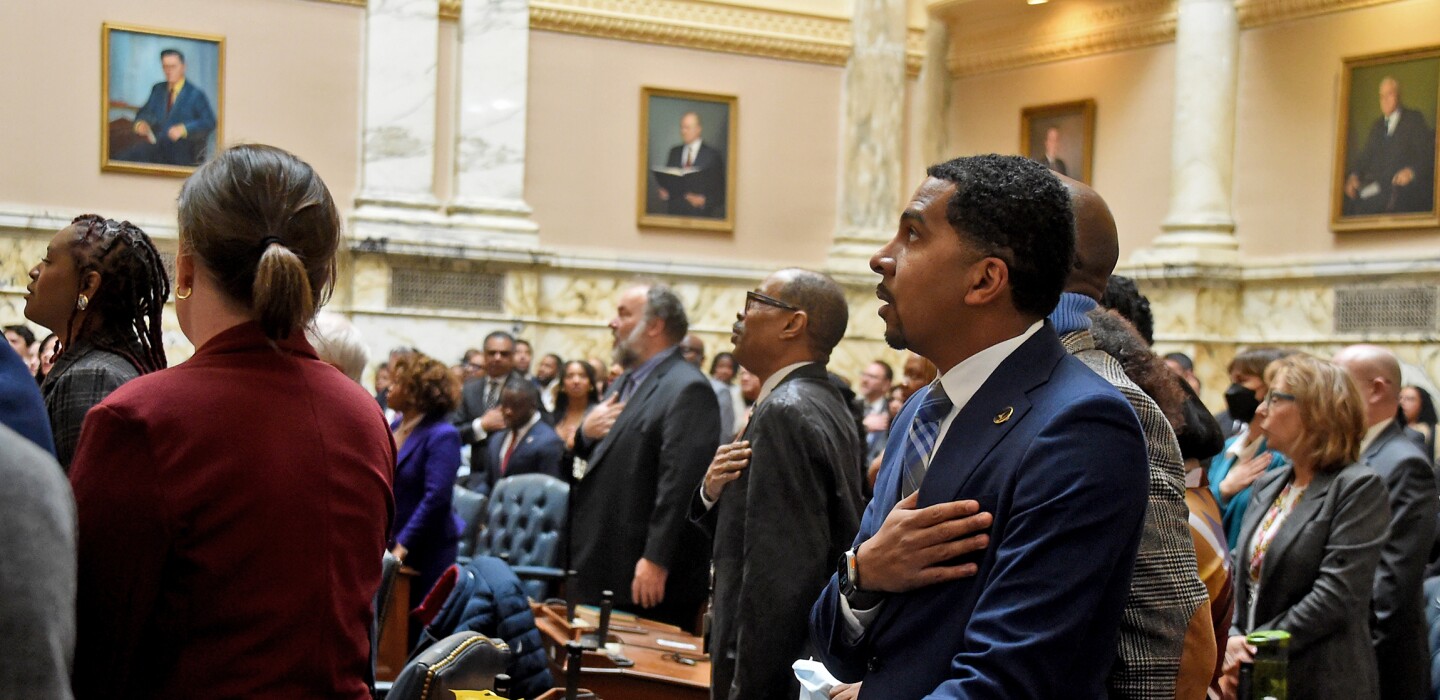
As Maryland lawmakers prepare for the upcoming legislative session in January, the discourse surrounding artificial intelligence (AI) regulation is gaining momentum. With several proposals on the table, there is a palpable sense of both curiosity and concern among legislators regarding the potential of AI to transform various sectors, including healthcare and education, while also acknowledging the inherent risks associated with this groundbreaking technology.
State Del. Caylin Young, a proponent of AI integration in public schools, compares AI’s potential impact to that of electricity, calling it a “transformative” force. Young believes that AI can be harnessed to streamline administrative tasks, enhance creativity, and ultimately elevate student performance. In the previous legislative session, Young introduced a bill aimed at directing the Maryland Department of Education to evaluate current and potential future uses of AI in schools. Although the bill did not pass, it highlights a growing recognition of AI’s significance in education.
The urgent need for regulations arises from the risks pointed out by various stakeholders. For instance, Republican Del. Jesse Pippy emphasizes the necessity of establishing “guardrails” for AI technology, particularly in contexts like legal practice where the misuse of AI has led to inaccurate judgments and reputational damage. These concerns extend beyond law to encompass broader societal implications, such as privacy violations and discriminatory practices in hiring.
Highlighting a particularly alarming case, a former school principal alleges that an AI-generated audio recording misrepresented him, significantly affecting his career. Such incidents underscore the necessity for protective measures against misleading or harmful AI outputs.
In July, legislative discussions reached a broader national context when former President Donald Trump signed executive orders aimed at propelling the United States toward AI global dominance, a move accompanied by the relaxation of certain regulatory frameworks. This shift sparked debates regarding the balance between fostering innovation and ensuring consumer protections. Experts like Jamil N. Jaffer and Nitin Agarwal caution against hastily implemented regulations that could inadvertently stifle advancement. Agarwal proposes a unified federal framework that could promote safety and accountability without stifling innovation.
Maryland’s pursuit of AI regulation also reflects a wider national trend—states are attempting to fill the regulatory gaps left by the federal government. The Maryland General Assembly has already created a workgroup to explore recommendations aimed at protecting consumers from potential abuses associated with AI in employment and housing contexts. However, the absence of cohesive federal guidelines raises concerns about a fragmented regulatory landscape that could hinder AI’s development and adoption while still safeguarding public interests.
Concerns about AI employment practices echo throughout the discussions on regulation, with State Sen. Katie Hester previously proposing legislation that would restrict the use of AI in job applicant screenings. The overarching fear is that AI tools could introduce biases into hiring processes, exacerbating existing inequities. As deliberations progress, the fate of such measures remains uncertain and will likely resurface as legislators reconvene in January.
Moreover, the American Psychological Association is poised to release a health advisory regarding the use of AI-generated counseling apps, signaling an increasing awareness of the implications of AI in mental health contexts. The advisory will emphasize the importance of human oversight in AI applications, particularly given the technology’s limitations.
As Maryland prepares to tackle these pressing issues in the upcoming session, the intersection of innovation and regulation continues to present challenges and opportunities. Lawmakers are tasked with navigating a complex landscape that balances the potential benefits of AI against the associated risks. Ultimately, the outcome of this legislative push could set a precedent for how AI is managed not just in Maryland, but across the nation as states grapple with similar challenges.
Through conscious and deliberate action, Maryland could lead the way in establishing a regulatory framework that not only protects consumers but also fosters innovation in a responsible manner. The deliberations in January will be a critical step in shaping the future landscape of AI regulation, not just for Maryland, but potentially for the United States as a whole. As stakeholders continue to engage in discussions and share insights, the collective goal remains clear: to harness the power of AI for the benefit of society while safeguarding against its pitfalls.
Source link