
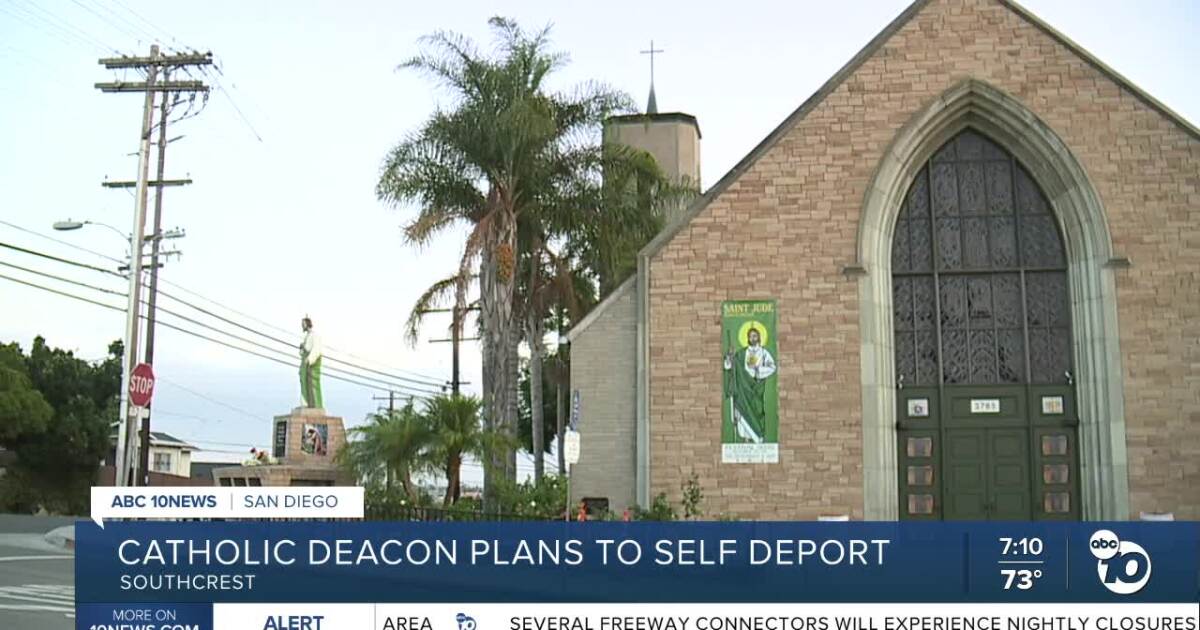
On a recent Sunday at St. Jude Shrine of the West in Southcrest, San Diego, a long-serving Catholic deacon made a surprising announcement during mass: he would be self-deporting to Tijuana due to the revocation of his legal resident status. This news has sent shockwaves through the local community, prompting many parishioners to seek additional information regarding the circumstances surrounding this decision.
The deacon, who has been an integral part of the St. Jude community for nearly four decades, came to the United States at the age of 13. His lengthy ministry and service have left a memorable mark on the parish, making the announcement all the more poignant for his congregation. During his announcement, the deacon expressed his intention to return to Tijuana, which raises both personal and broader legal questions regarding immigration status and pastoral care for individuals facing similar situations.
The Diocese of San Diego confirmed the facts of the situation but remained limited in detail. While it acknowledged the deacon was indeed a legal resident and that he had made the decision to self-deport, specific information about his tenure with the church and the steps being taken to assist in his immigration case were not disclosed. This lack of detail has left many parishioners in a state of confusion and concern for their beloved deacon.
#### The Intersection of Faith and Immigration
This incident ignites a larger conversation surrounding the intersection of faith, community support, and immigration policies in the United States. For many, the church serves as a sanctuary, providing not only spiritual guidance but also a vital community support system. The deacon’s situation highlights the precarious nature of immigration law and the implications it can have on individuals deeply rooted in local communities.
For decades, the deacon has been a pillar of faith, providing counsel and support, and fostering a sense of belonging among parishioners. His departure raises profound questions about the effectiveness of the current immigration system and the human stories behind legal statutes. It also reiterates the call for more compassion and understanding surrounding immigration matters, particularly those involving long-term residents who have devoted their lives to their communities.
#### Emotional Reactions from the Community
Upon hearing the deacon’s announcement, churchgoers expressed a mix of shock, sadness, and frustration. Many viewed him not just as a religious figure, but as a friend, mentor, and community member whose absence would leave a notable void. His self-deportation symbolizes a loss not just of a parish leader, but of a deeply woven relationship that many in the congregation have developed over years.
Several parishioners reached out to local news outlets to share their thoughts, emphasizing the importance of community support in times of personal crisis. The emotional impact of such announcements often reverberates beyond the individual, affecting families and entire communities who feel the ramifications of immigration policies.
#### Broader Context of Immigration Status
The deacon’s situation is not isolated but rather part of a broader narrative regarding the complexities of immigration status in the United States. An increasing number of individuals, even those who have lived in the country for decades, find themselves navigating the precarious waters of immigration status. This situation raises important questions about the balance between policy enforcement and the need for human compassion in dealing with individuals who have made significant contributions to society.
It is essential to contextualize the legal frameworks that govern immigration status and understand them as they relate to human experiences. Many individuals are left in vulnerabilities, often due to administrative missteps, changes in regulations, or challenges related to the extensive bureaucratic processes involved in immigration law.
An immediate call to action arises for faith groups and community organizations to play a role in advocating for policy changes that support individuals facing similar situations. The church can serve as a powerful platform for drawing attention to issues of legal justice and seeking solutions that recognize the humanity of individuals impacted by these laws.
#### Conclusion: A Community’s Call for Compassion
As the deacon prepares for his departure, it is essential for the community to rally around him, expressing solidarity and support. This situation not only illustrates the complexities surrounding immigration but also serves as a reminder of the larger societal responsibilities in advocating for justice and compassion in our legal systems.
Moving forward, church leaders and community advocates must convene discussions on immigration reform, stressing the need for policies that prioritize humanitarian concerns. The deacon’s journey exemplifies the challenges faced by many long-term residents navigating the nuanced legal landscape, and it should serve as a catalyst for community engagement and advocacy.
By opening up channels for dialogue and support, the community can harness its collective strength to address not only the immediate implications of this incident but also the systemic issues at hand. Through compassion and concerted efforts, a path forward can be paved—one that nurtures the values of faith, community, and acceptance in the face of legal challenges. Ultimately, the story of this longstanding deacon and his congregation serves as a poignant reminder of the intersection between faith and the complex realities of immigration in America today.
Source link


