
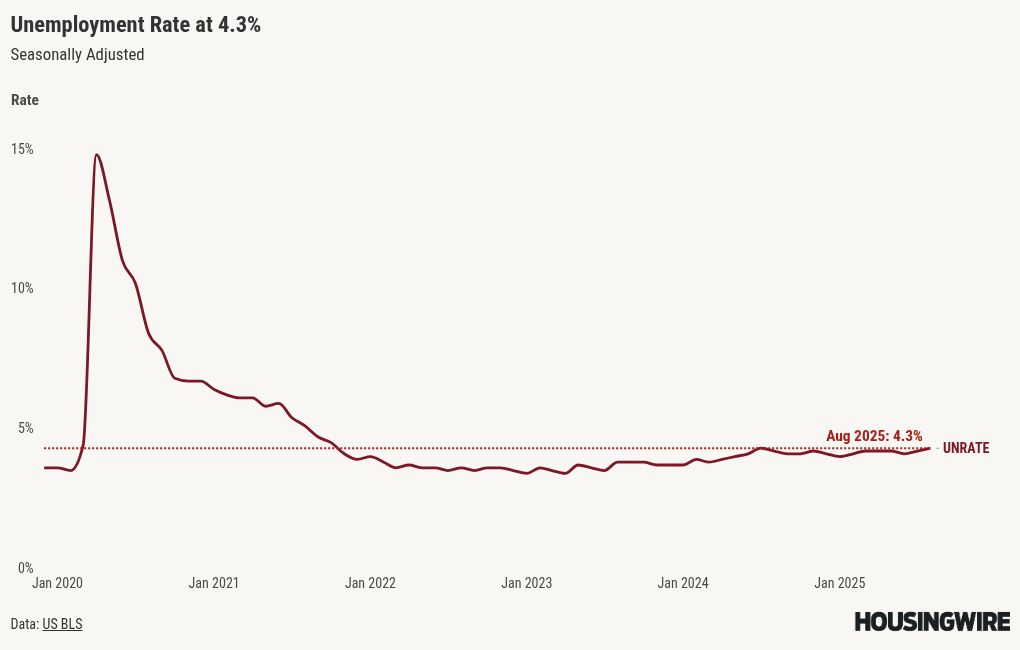
In August, the U.S. labor market demonstrated further signs of a slowdown, as evidenced by recent employment data released by the U.S. Bureau of Labor Statistics (BLS). The economy added a mere 22,000 non-farm payroll jobs, far below the forecasts anticipated by economists. This downturn signifies a larger trend of a cooling economy, previously illustrated by downward revisions in job estimates from prior months—21,000 jobs were subtracted from July’s figures, and an outright loss of 13,000 jobs occurred in June.
Current Job Market Analysis
Alongside the low job addition count, the unemployment rate saw a slight increase to 4.3%, marking the highest rate since October 2021. With approximately 7.4 million individuals unemployed, the figures are stirring concerns about the sustainability of the current labor market. "The underwhelming jobs report reinforces the picture of a labor market that’s losing momentum without collapsing," noted Sam Williamson, a senior economist at First American.
In analyzing specific sectors contributing to the job landscape, the health care industry led job gains with 31,000 new positions. However, this was overshadowed by losses in other critical areas such as:
- Federal Government: -15,000 jobs
- Mining and Oil Extraction: -6,000 jobs
- Wholesale Trade: -12,000 jobs
- Manufacturing: -12,000 jobs and a total of 78,000 jobs lost in 2023 thus far
The broader implications of these trends raise questions regarding external factors, such as tariffs, which may be influencing manufacturing jobs. Mike Fratantoni, chief economist for the Mortgage Bankers Association, emphasized that even typically robust sectors such as health care are beginning to show signs of stagnation.
Construction and Real Estate Insights
The construction sector also faced setbacks, shedding 7,000 jobs in August. Within this sector, residential building construction experienced a slight decline, with 900 jobs lost. On a somewhat positive note, heavy and civil engineering construction did see a gain of 2,300 jobs, signaling potential stability in specific subfields. Conversely, real estate and leasing managed to add 1,600 jobs overall, with some segments showing a modest uptick.
Implications for Monetary Policy
The latest employment figures are believed to dictate Federal Reserve monetary policy, particularly regarding interest rates. Economists interpret the softer job numbers as a near guarantee for a potential interest rate cut in the upcoming meeting. Williamson stated, "With inflation not reaccelerating and job growth fading, the Fed may see this as an opportunity to recalibrate."
This forthcoming adjustment could provide relief for homebuyers facing high mortgage rates. The consensus among economists is that lower rates might encourage market activity among prospective buyers and sellers. However, this optimism must be tempered by uncertainties in the bond market, as Lisa Sturtevant, chief economist at Bright MLS, cautioned about fluctuating bond yields that could temper the anticipated benefits of a Fed cut.
The Broader Economic Landscape
The cooling job market raises critical questions about the economic landscape’s sustainability moving forward. These trends point to potential constraints on consumer spending, which historically drives economic growth. If the job market continues to cool, it could lead to decreased confidence among consumers, ultimately impacting various lobbies of the economy, including retail and services.
Moreover, the reduction in hiring and the rise in layoffs signal potential challenges for first-time job entrants and those seeking re-employment post-layoff. Fratantoni noted that the hiring rate remains relatively low, making it increasingly difficult for laid-off employees to find positions.
Conclusion
In summary, the job growth figures for August underscore a labor market that is losing momentum, a phenomenon that does not bode well for the prospects of the U.S. economy. While some sectors display resilience, the overall employment picture is clouded by weaknesses in manufacturing, construction, and the federal government. As we approach significant Federal Reserve meetings, the anticipated policy adjustments could influence economic conditions, notably in the housing market. However, stakeholders must remain cautious and navigate these dynamics carefully, as external factors may unpredictably impact both jobs and interest rates moving forward.
This analysis reflects a broader understanding of not only the present state of job growth but also the implications that such trends could have on the economy’s trajectory in the near future. With vigilance and adaptability, businesses and consumers alike may find opportunities within the changing landscape of the labor market.


