
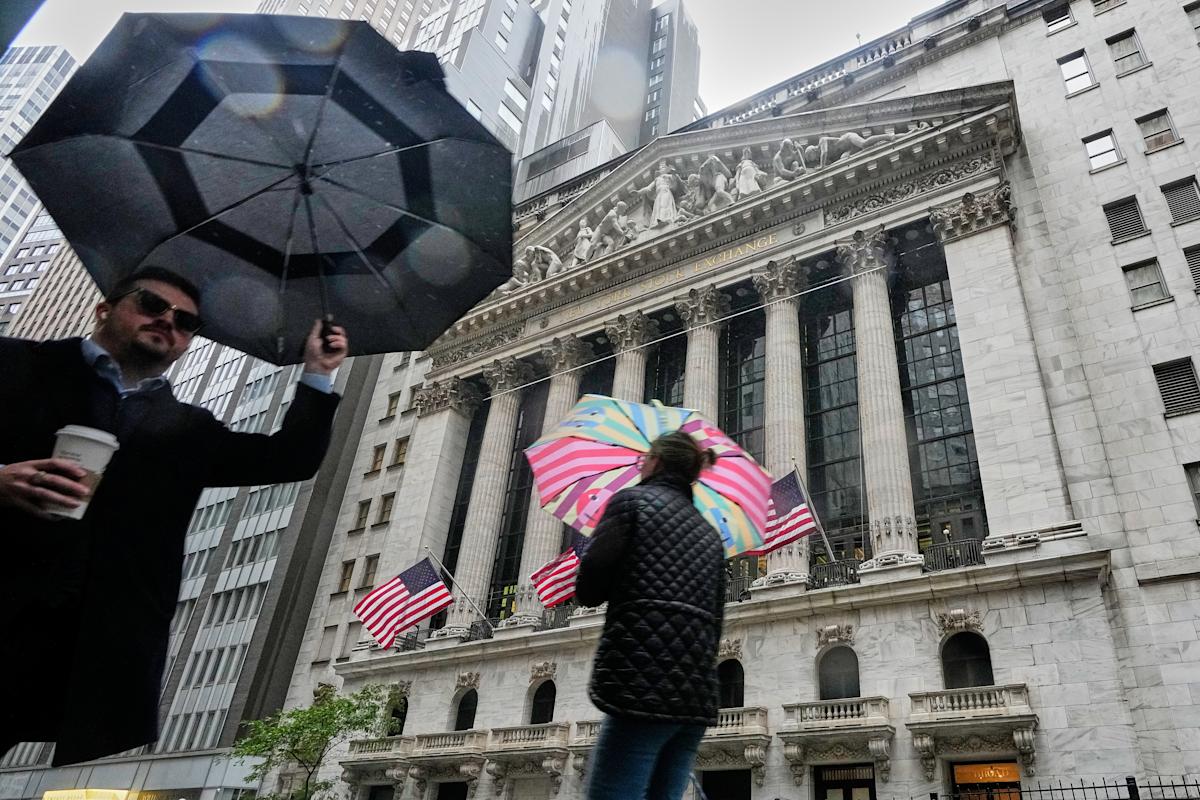
US stocks experienced a notable downturn on Tuesday, largely driven by an intensifying trade dispute between the US and China, adding to investors’ anxieties as the quarter’s earnings season commenced with major banks reporting their financial results. The Dow Jones Industrial Average fell 0.9%, the S&P 500 dipped by 1%, and the tech-heavy Nasdaq Composite saw a decline of over 1.4%, marking a significant retreat from the previous day’s strong performance.
The primary catalyst for this market shift was China’s recent moves to escalate its trade confrontation with the United States. Chinese authorities have imposed sanctions on five US-linked divisions of the South Korean shipbuilder Hanwha Ocean, effectively prohibiting local companies from engaging in business with them. Additionally, both nations initiated special port fees on each other’s vessels, a move aimed at asserting maritime dominance.
This escalation in trade rhetoric has dampened hopes that the two largest economies might navigate away from an all-out trade war. Investors were particularly sensitive to these developments, especially in light of the government shutdown creating a data blackout that limits investors’ understanding of economic dynamics. The delay in critical reports such as the September consumer price index (CPI) and other economic indicators has compounded uncertainty in the market.
As the earnings season unfolded, major US banks like JPMorgan Chase, Citigroup, Goldman Sachs, and Wells Fargo reported their quarterly figures. Despite healthy profit boosts driven by strong deal-making activities in the sector, the response from the stock market was underwhelming. Shares of JPMorgan and Goldman Sachs fell, while Wells Fargo managed a modest rise, likely buoyed by its successful quarterly performance.
JPMorgan’s CEO, Jamie Dimon, touched on a crucial concern, labeling asset prices as “elevated” for the second consecutive quarter. He acknowledged the possibility of risks related to high asset valuations, implying that the conditions for a market pullback could be present if external factors go awry. This trend of cautious sentiment mirrors the overarching anxieties tied to US-China relations, as stakeholders grapple with how tariffs and trade policies could impact economic prospects further down the line.
In the tech sector, the focus turned to Advanced Micro Devices (AMD), which announced a deal to provide Oracle with 50,000 AI chips. This partnership is part of a broader trend of tech companies ramping up investments in artificial intelligence (AI) capabilities. AMD’s stock rose as investors reacted positively, contrasting sharply with the broader market’s decline.
The volatility in international relations and economic data releases is also affecting specific sectors. Gold prices surged amid the trade tensions, with many investors flocking to the precious metal as a safe haven. This shift in investor sentiment highlights the broader implications of geopolitical developments on asset classes beyond equities.
Additionally, cryptocurrency markets showed signs of distress with significant sell-offs, driven by apprehensions surrounding the US-China tariff skirmishes. Bitcoin and Ethereum prices slipped, reflecting a dip in risk appetite among investors as broader concerns about the stability of financial markets came to the forefront.
For companies like Johnson & Johnson, which reported better-than-expected earnings and announced plans to spin off its orthopedics unit, the market’s reaction was subdued despite the positive news. Early premarket trading indicated a minor drop in their stock price, showcasing the prevailing cautious outlook among investors amid a backdrop of increasing trade concerns.
Overall, the combination of escalating US-China tensions, a cautious earnings season kickoff, and delayed economic data has stirred anxiety in the markets, leading to a broader decline in major indices. As investors await more clarity on both geopolitical developments and domestic economic indicators, the potential for further volatility looms large.
In conclusion, the current state of the market reflects a complex interplay of geopolitical strife and domestic economic uncertainty, particularly exacerbated by the ongoing government shutdown. Investors find themselves navigating a precarious landscape marked by elevated asset prices and increasing anxieties over trade policies. Moving forward, how these elements coalesce will significantly influence market trajectories in the days and weeks to come.
Source link


