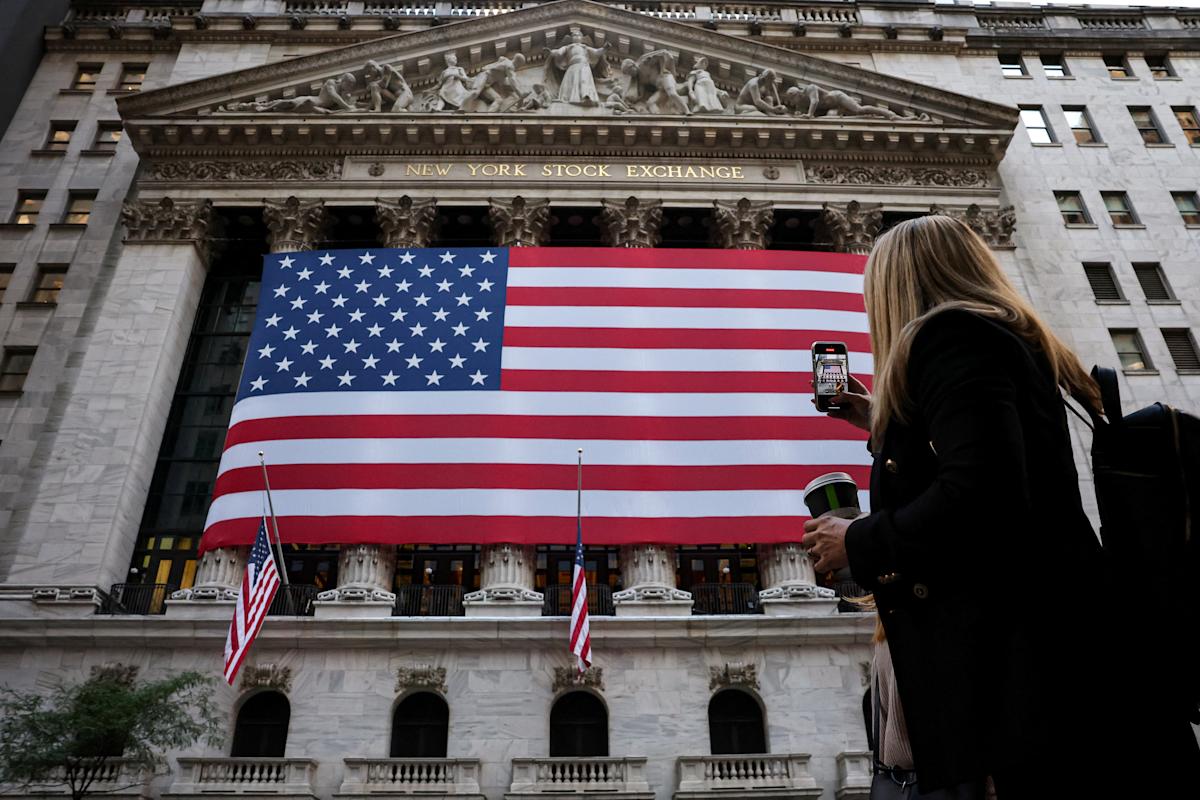
US stock futures exhibited muted trading on Friday, as investors digested the recent economic landscape while eagerly anticipating the Federal Reserve’s forthcoming decision on interest rates. The Dow Jones Industrial Average futures (YM=F) dipped by 0.2%, while the S&P 500 futures (ES=F) slipped by 0.1%. Contracts on the tech-heavy Nasdaq 100 (NQ=F) remained almost unchanged, teetering just above the flat line. This cautious sentiment followed a recent surge where all three major indexes achieved record highs on Thursday, notably with the Dow (^DJI) breaching the 46,000 mark for the first time.
### Economic Indicators Shaping Market Sentiment
In recent weeks, investors have absorbed a plethora of economic data to glean insights into the Federal Reserve’s next maneuvers. Key indicators point to a mixed economic backdrop. Recent jobs data reveals a clear weakening in the labor market, characterized by a mere addition of 20,000 jobs last month, alongside a significant uptick in weekly initial jobless claims, which surged to a near four-year high. Simultaneously, inflation rates remain persistent, with consumer prices climbing, potentially fueled by the ripple effects of tariffs imposed during the Trump administration.
Despite these inflationary pressures, market sentiment appears to favor a Federal Reserve rate cut in the near term. Current trading forecasts indicate a staggering 90% probability of a quarter-point cut during the Fed’s September meeting, with a further 75% anticipating the central bank may implement a total of three cuts by year’s end.
### Upcoming Data and Consumer Sentiment
As attentions drift toward the Fed’s decision, a quiet period precedes the release of key data. Friday’s initial reading of consumer sentiment from the University of Michigan is expected to provide further insights. While many signals currently suggest steady consumer spending, there are underlying concerns about Americans’ perceptions of their purchasing power, reflecting a broader unease regarding the job market.
In terms of weekly performance, the three primary stock indexes are on course for gains of around 1.6%. The Dow (^DJI) is looking at its first winning week in three, having crossed the 46,000 threshold, while both the S&P 500 (^GSPC) and Nasdaq Composite (^IXIC) are set for their best weekly performances since early August.
### Traders and Market Movers
In premarket trading, several key stocks gained traction. Notably, Super Micro Computer Inc. (SMCI) saw a 5% rise after announcing deliveries of high-volume Nvidia HGX B300 systems to customers globally. Microsoft (MSFT) experienced a 1% boost following the news of a non-binding agreement with OpenAI that paves the way for its transition into a for-profit entity. Meanwhile, shares of RH (RH) fell by 10% after reporting second-quarter revenue that met Wall Street expectations but provided a disappointing forecast, which fell short of analysts’ predictions.
Another focus of notable interest is Opendoor (OPEN). Following the appointment of a new CEO, who transitioned from Shopify (SHOP), the stock caught the attention of JP Morgan analyst Dae Lee. The narrative surrounding Opendoor reflects a candid conversation on undervaluation, potentially positioning it for increased visibility among investors.
Warner Bros. Discovery (WBD) also continued to draw attention following speculation around a potential $29 billion bid from Paramount Skydance (PSKY), resulting in a 4% surge in premarket trading after a remarkable 29% increase on Thursday.
### Stability and Institutional Movement
On a broader note, gold futures (GC=F) are on track for their fourth consecutive week of gains. This uptick can be attributed to a shift in institutional placements towards the haven asset amidst an increasing appetite for rate cuts among investors. The performance of gold demonstrates a cautious stance among investors, seeking refuge in more stable assets while awaiting the Fed’s pivotal announcements.
### The Broader Implications
In summary, the interplay between labor market indicators, inflation rates, investor sentiment, and Federal Reserve policy creates a complex tapestry for the stock market. The muted trading in futures underscores a cautious optimism, as investors balance the potential for rate cuts against the backdrop of economic challenges. As the Fed’s meeting approaches, market participants are urged to remain vigilant, as shifts in monetary policy could significantly influence stock market trajectories moving forward.
### Conclusion
Investors find themselves at a crucial juncture, where economic data and Federal Reserve decisions intersect. As markets navigate this uncertain terrain, an understanding of the key indicators, investor behavior, and potential policy shifts remains paramount. The coming days will likely reveal whether the anticipated rate cuts can indeed fuel further growth—or whether persistent economic challenges continue to cast shadows over market optimism. As always, staying informed and agile in response to shifting economic currents will be essential for navigating the landscape ahead.
Source link