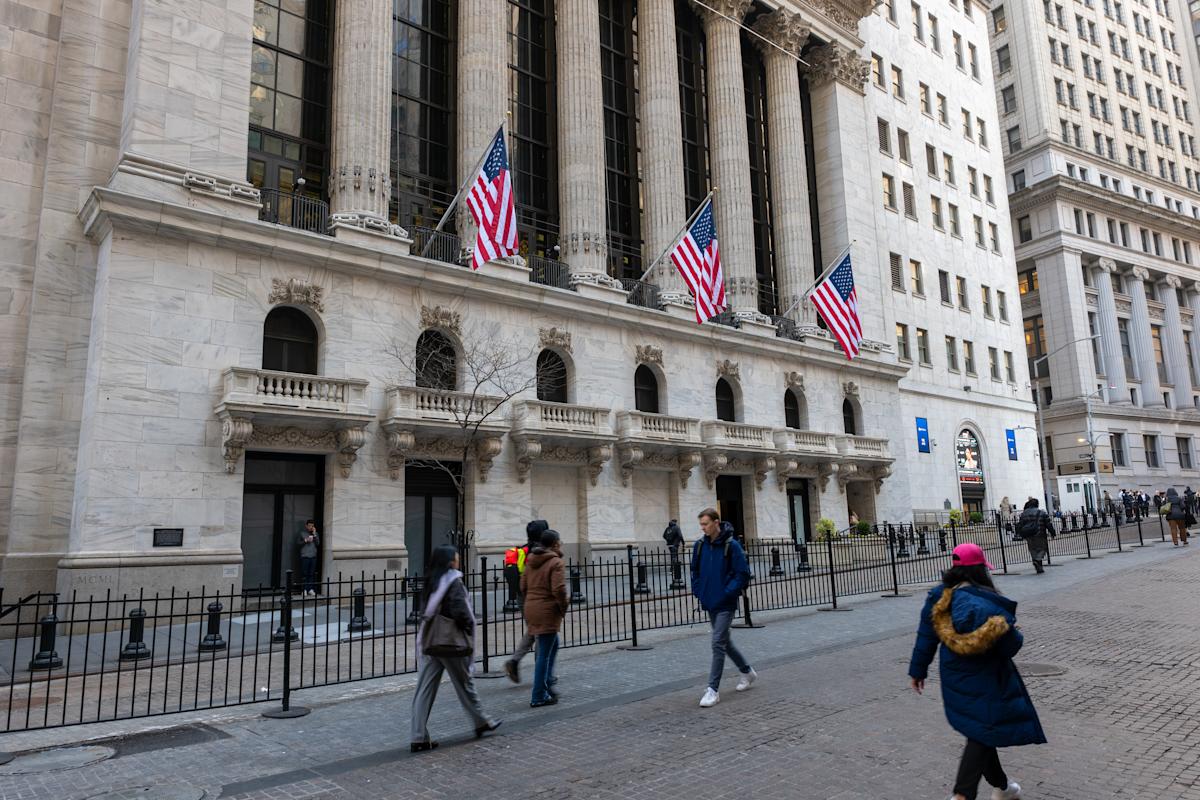
U.S. stock futures have shown signs of decline following a remarkable rally on Wall Street, with the market appearing to take a breath before an important earnings report from Nvidia (NVDA). Futures linked to the Dow Jones Industrial Average (YM=F), S&P 500 (ES=F), and Nasdaq 100 (NQ=F) dipped by around 0.2%. This comes after an impressive closing week, where the Dow Jones increased by over 800 points, equating to a 1.8% gain, marking its first record in 2025.
Last Friday, the market reaction was notably positive, spurred by comments from Federal Reserve Chair Jerome Powell suggesting a potential shift toward rate cuts beginning in September. The S&P 500 noticed a 1.5% increase, narrowly missing a new all-time high, while the Nasdaq Composite rose by about 1.9%. The promising signs from Powell ignited investor enthusiasm, resulting in a market bounce that defied earlier concerns over inflation and interest rates.
As we move forward, all eyes are set on Nvidia—the foremost stock in the S&P 500—where analysts are anticipating earnings of $1.01 per share alongside revenue projections of $46.13 billion. This optimism reflects the increasing demand for AI hardware as Nvidia’s stock has surged by 32% year-to-date, effectively doubling in value since the market’s low in April. This upcoming earnings report is perceived as not just a benchmark for Nvidia, but a critical indicator for the broader tech sector and the market landscape.
In addition to Nvidia, earnings will also be reported from other notable tech companies like Dell (DELL) and Marvell Technology (MRVL) later this week. As investors brace themselves for these results, the overarching sentiment is that a successful earnings report from Nvidia could bolster confidence across the technology sector, potentially shifting sentiment away from a looming rotation out of tech as professionals assess the sustainability of growth in this sector.
Simultaneously, market participants are also looking to the economic landscape for additional insights, particularly the anticipated July PCE inflation report—the preferred inflation metric for the Federal Reserve. Expectations indicate a modest increase in core PCE, forecasted to rise by 2.9% year over year, up slightly from June’s 2.8%. This data could further guide the Federal Reserve’s monetary policy decisions and affect market sentiment.
On a wider economic front, geopolitical developments also pertain to the health of global markets. Recent strikes on Russian oil production sites by Ukraine have led to a spike in oil prices, raising concerns regarding the stability of Russian oil supply chains. News outlets, including Reuters, have reported this situation as creating volatility within energy markets, which could tie back into the broader economic conditions affecting U.S. equities.
In summary, the recent gains in U.S. stock indices depict a market fueled by optimism surrounding interest rate adjustments and robust corporate earnings. However, the slight decline in futures signals a period of cautious waiting as pivotal earnings from Nvidia and inflation data loom on the horizon. Investors remain in a delicate balancing act where they must juxtapose positive corporate developments against external economic and geopolitical factors.
The next few days promise to be critical as we assess whether the momentum can be sustained or if markets will recalibrate in light of new information. In an era of heightened sensitivity to inflation data and geopolitical events, the fundamental health of major corporations like Nvidia, along with overall economic indicators, will likely dictate the future path of U.S. equities as we head into the latter half of 2023.
As investors navigate these complexities, the call for vigilance remains ever so pertinent. With every earnings report and economic indicator, the delicate tapestry of market sentiment will continue to weave in and out of bullish and bearish tendencies, underscoring the ever-evolving landscape of investing in the current economic climate.
Source link