
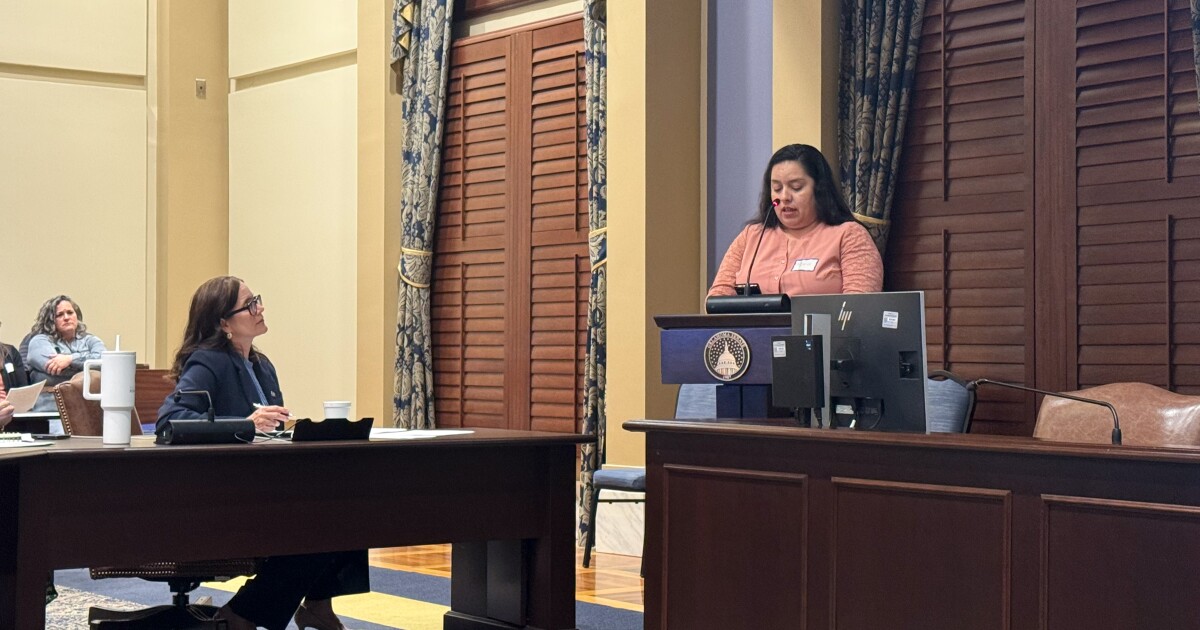
Mental health service providers in Oklahoma are sounding the alarm as budget cuts threaten crucial programs and initiatives across the state. Advocates and community members gathered at the Oklahoma Capitol recently to voice their concerns about the state budget and the dire need for increased funding for mental health services. This collaborative meeting, organized by Senate and House Democrats, drew close to 30 participants who shared personal stories and urged lawmakers to consider the profound impact of funding cuts.
One of the most poignant testimonies came from Antonio Garringer, who attributes much of his success to his involvement with Thunderbird Clubhouse in Norman. Garringer, who has cerebral palsy and battles anxiety and depression, spoke of his struggle with social isolation and how the clubhouse has fostered a sense of community in his life. His heartfelt plea emphasized the wider implications of cutting mental health services: “Even though I’ve only been a member for a very short time, I already feel a deep connection to many of the people there, and it has expanded my life so much,” he said, advocating for a reassessment of budget cuts that adversely affect those in need.
Linn Blohm, the Executive Director of Thunderbird, echoed these sentiments, lamenting the reality of budget reductions imposed by the Oklahoma Department of Mental Health and Substance Abuse Services (ODMHSAS) that took effect at the beginning of the month. Blohm articulated a common sentiment among advocates: “So many of us say we value community and family, but then we don’t provide the tools for people to live lives with dignity.”
OCARTA, another social service nonprofit that connects individuals in recovery to peer support specialists, also voiced its concerns regarding the impact of cuts. Executive Director Brani Vore articulated the dire consequences of being labeled “nonessential,” stating their organization faces potential closure. She highlighted the broader implications of underfunding mental health services, explaining that failing to invest in mental health leads to increased costs elsewhere—such as in jails and hospitals, and tragically, in funerals. “Every dollar we don’t invest in people, we end up paying for somewhere else,” Vore pointed out.
These cuts stem from ODMHSAS’ attempt to correct past financial mismanagement, compounded by a funding model that the agency admits has strained its resources. Interim Commissioner Slavonic mentioned the necessity of making difficult decisions: “ODMHSAS has been operating with more contracts than our budget can sustain.” While the agency aims to align its funding with essential services, the impact on community support services is stark.
Familial concerns were also a prominent theme at the meeting, with several attendees advocating for their children’s access to mental health care. There was a palpable urgency among parents who called upon Democratic lawmakers to collaborate with their Republican counterparts in addressing the critical importance of mental health funding. Ashley Gay, a program manager at Heather’s Hope Housing, shared her personal journey of rebuilding her life through transitional housing. She underscored the vital need for more programs and funding, asserting that preventive measures can significantly mitigate more severe outcomes like addiction, incarceration, and suicide: “These are preventable outcomes, but only if we invest in prevention.”
Senate Minority Leader Julia Kirt, who hosted the event, expressed gratitude for the turnout and the raw honesty of the testimonials shared. She noted the underlying issue at stake: the value of the services provided by these organizations is often overlooked. “I think people are clear that their programming, the things that keep them going and the things that they do to serve the community is not seen and understood for its value,” reflected Kirt. Her concerns about the cuts impacting essential services were shared by many in attendance, who came to represent a landscape of mental health care that requires support and acknowledgment.
As the state gears up for its next legislative session, the need for mental health advocacy remains urgent and clear. The testimonials from those directly impacted by these cuts highlight a pressing need for lawmakers to prioritize mental health funding as a integral part of the state’s health and social infrastructure. The echoed sentiments at the Capitol reveal that the fight for these services is fundamental not just for individuals, but for the entire Oklahoma community.
With mental health issues gaining recognition in public discourse and policy, the hope is that the advocates’ voices will resonate with lawmakers as they prepare for this legislative session. Further investment in mental health services is not merely a budgetary decision; it is an investment in the well-being and future of the community as a whole.
As such, Oklahomans continue to urge their lawmakers to reconsider cuts and engage in meaningful dialogue about mental health funding, advocating for a more robust and supportive framework that acknowledges the importance of mental health services for all citizens. By fostering an environment where mental health care is prioritized, Oklahoma can take significant strides toward ensuring that individuals not only survive but thrive in their communities.
Source link


